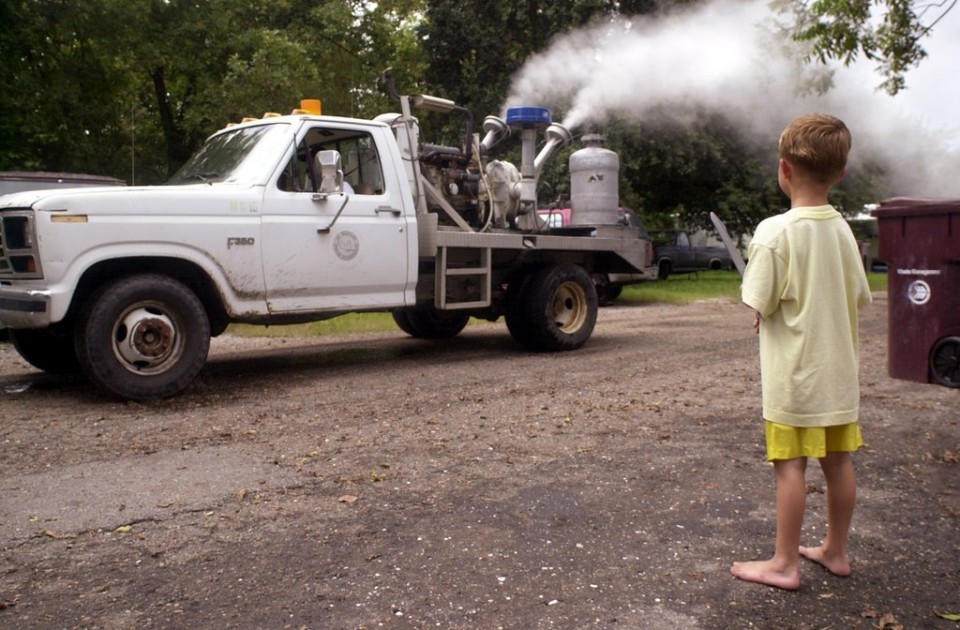
Trucks from Clarke Mosquito Management rolled through Westmont and Woodridge on Wednesday, July 1, delivering the first community-wide adult mosquito control applications of 2026.
The Village of Westmont announced the treatment in a public safety advisory posted Monday, June 29. Spray trucks operated between dusk and dawn, the hours when adult mosquitoes are most active, according to the village. Woodridge scheduled its own full-town spray the same night, with trucks beginning around 10 p.m. The village had not posted a cancellation notice as of publication.
Both communities contract with Clarke Mosquito Management, a St. Charles-based firm that has provided mosquito control services since 1946. The treatments target adult mosquitoes using Merus, a product formulated with natural pyrethrins derived from chrysanthemum flowers. The product is OMRI-listed, meaning it has been reviewed against USDA organic standards and is approved for use in residential areas, according to Clarke.
More applications planned
The July 1 spray was the first of multiple planned applications this season. The Westmont advisory noted that community-wide treatments occur "at various times throughout the year" as part of Clarke's comprehensive program, which also targets mosquitoes in their larval stage. No dates for future applications have been published.
West Nile virus already detected in Illinois
The spraying comes as West Nile virus-positive mosquitoes have already been confirmed across parts of Illinois this season. The Chicago Department of Public Health reported its first positive samples on Friday, June 12. By June 16, positive pools were detected in Wilmette, Evanston, and Northbrook, according to Mark Clifton, executive director of the North Shore Mosquito Abatement District.
"The detections will increase as we move forward in the season," Clifton told the Chicago Tribune. "It's hard to know exactly how many mosquitoes are infected, but this is about the time where you start seeing it."
Regionally, the threat is elevated. In 2025, the North Shore district in Cook and Lake counties recorded its highest West Nile infection rate on record, with about 56 out of every 1,000 mosquitoes testing positive at peak, Clifton said. No DuPage County-specific detection data for 2026 has been published.
How to get spray alerts
Residents who want advance notice before future applications can sign up at clarkeportal.com/hotline or call 1-800-942-2555. Under the Pesticide Application on Rights-of-Way Notification Act, which took effect January 1, 2025, applicators must provide 24-hour written notice before spraying public rights-of-way including roadways, sidewalks, and drainage areas.
Prevention tips
The DuPage County Health Department recommends the "4 Ds" to reduce mosquito exposure:
- Drain standing water from tires, containers, and pet bowls.
- Defend with DEET-based repellent on exposed skin.
- Dress in light-colored long sleeves, pants, and closed-toe shoes.
- Dusk & Dawn — limit outdoor time or wear repellent during peak mosquito hours.
Residents can track West Nile virus activity levels in DuPage County through the health department's Personal Protection Index at dupagehealth.org/236/West-Nile-virus.