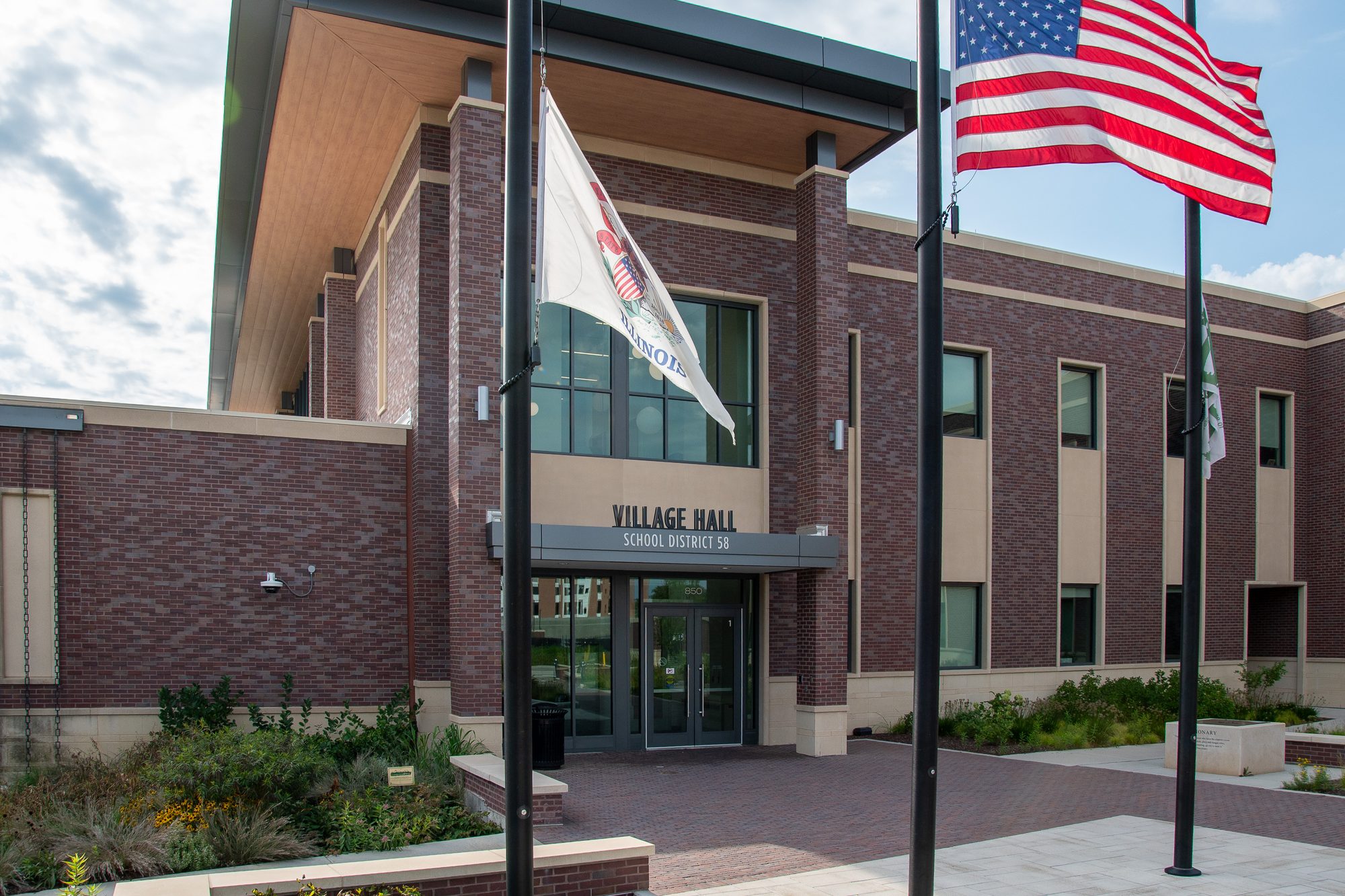
Starting January 1, teachers at Downers Grove North, Downers Grove South, and schools across four local districts will know that no algorithm played a role in their performance rating.
Gov. JB Pritzker signed Senate Bill 2909 on Thursday, July 10, banning artificial intelligence from teacher evaluations statewide. The law passed both chambers unanimously — 55-0 in the Senate on April 16 and 113-0 in the House on May 27 — and takes effect January 1, 2027.
That means Community High School District 99, Grade School District 58, Woodridge District 68, and Westmont CUSD 201 must have compliant evaluation policies in place by the new year. The January 1 effective date gives districts the full fall semester to update policies; compliance is not required by the August start of school.
What the law does
Under Public Act 104-0565, evaluators cannot use any AI tool to assign a numerical score or qualitative rating — "excellent," "proficient," "needs improvement," or "unsatisfactory" — for any component of a teacher's evaluation. AI is also banned from any evaluation task requiring professional judgment.
"I believe that our teachers should be judged based on actual observations and professional judgement, not by AI software," State Sen. Christopher Belt (D-Swansea), the bill's sponsor, said in a July 12 press release.
The prohibition cuts both ways. Teachers cannot use AI to generate evidence of their professional practice to submit for evaluation consideration.
AI is still allowed for administrative support — scheduling, data organization, transcription — but with a catch: whoever uses an AI tool must disclose its name and specific purpose to the other party.
What districts must do
Each district must convene its joint evaluation committee to determine exactly which administrative AI uses are permissible. That committee, already required under the School Code for student growth measures, has until January 1 to finalize those guidelines.
Districts using evaluation platforms with AI-enabled scoring features would need to disable or stop using those features under the new prohibition. None of the four local districts have publicly commented on what compliance steps they plan to take.
The law does not create new penalties for violations. Non-compliance would be handled through existing School Code disciplinary mechanisms.
Why it matters locally
A Teach Plus Illinois survey found 58 percent of Illinois educators already use AI for lesson planning and nearly half use it to tailor instruction to individual students. One in four educators reported receiving no AI professional development at all. The law draws a firm line: AI can help with paperwork, but human judgment alone determines whether a teacher is rated proficient or needs improvement.
The same day Pritzker signed SB 2909, the Illinois State Board of Education released a 400-page AI guidance document for schools. State Superintendent Tony Sanders said the framework helps districts "navigate new technologies in a way that strengthens instruction, protects students, and builds trust."
Each district's joint evaluation committee must finalize AI-use guidelines before January 1. Board meeting agendas for Districts 99, 58, 68, and Westmont 201 are posted on their respective websites.