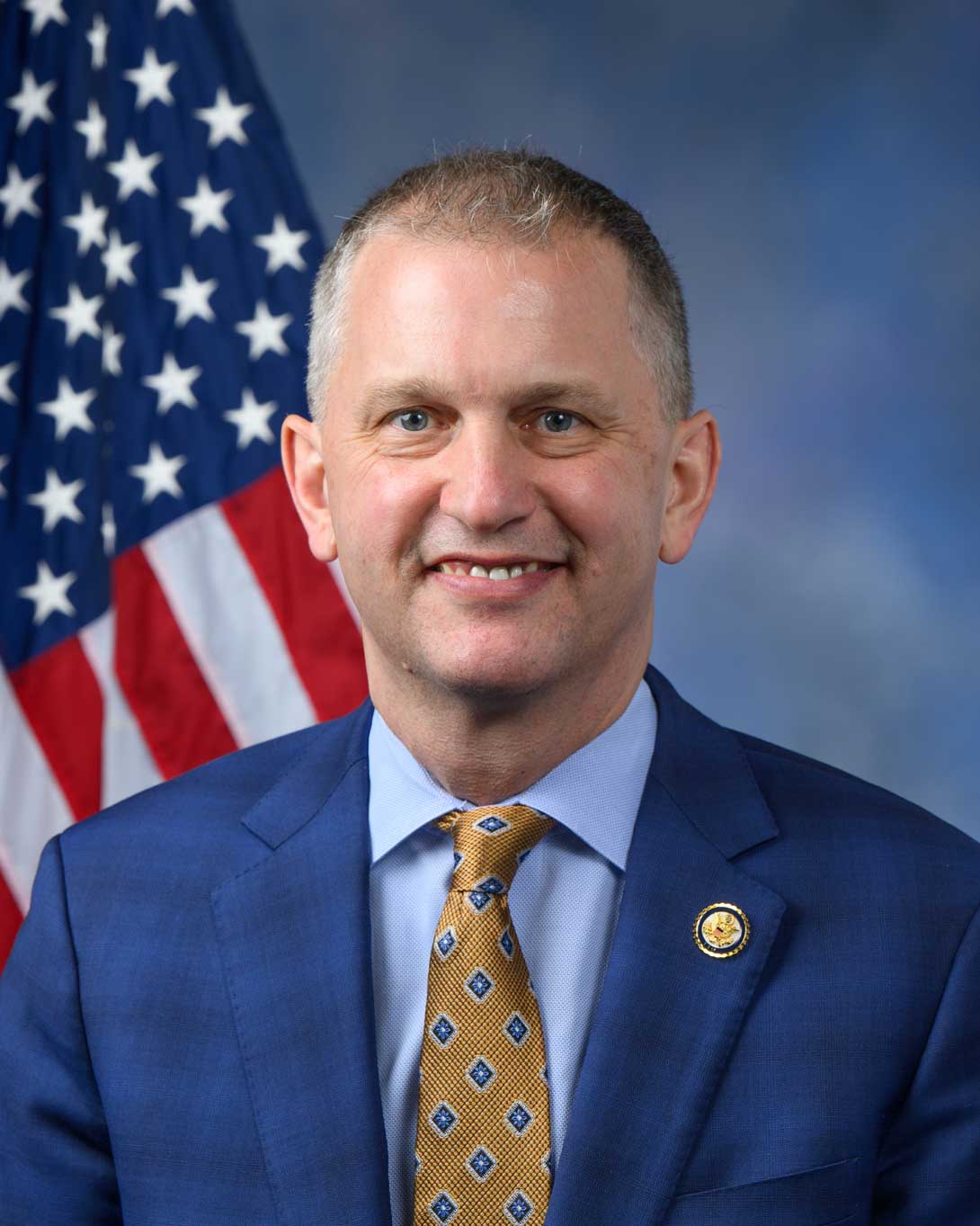
U.S. Rep. Sean Casten of Downers Grove named tariffs and energy costs as his top priorities in the race for Illinois' 6th Congressional District.
Casten, a Democrat seeking a fifth term, detailed his positions in a candidate questionnaire published by Patch on Oct. 20. He faces Republican challenger Niki Conforti in a rematch of their 2024 contest ahead of the Nov. 3 election.
On tariffs, Casten said Congress holds exclusive authority to levy taxes and duties. He pointed to the Supreme Court's ruling in Learning Resources Inc. v. Trump as validation. He called tariffs "mathematically illiterate" as economic policy, writing that "raising the costs of goods and services leads to higher-priced goods and services."
Casten cited the Energy Bills Relief Act (EBRA), a 419-page bill he co-authored with U.S. Rep. Mike Levin of California, as his central legislative vehicle on energy costs. The bill would change utility regulations to give energy producers a profit incentive to lower consumer costs. Casten said in his questionnaire that the bill has drawn 163 House co-sponsors, while the League of Conservation Voters counted 122 Democratic co-sponsors when the bill was introduced in March.
Roll Call reported the bill stands little chance of passing in the current Congress but could lay groundwork if Democrats gain seats after the midterms.
On AI regulation, Casten compared the tech industry's approach to releasing a pharmaceutical drug without testing. He said AI companies have asked Congress for liability waivers and argued that existing criminal and civil law should apply to AI-created harms, including stolen private information and content that encourages self-harm.
Casten also weighed in on license plate readers. He said Flock cameras and similar systems should be regulated like cellphone location data, with law enforcement needing a search warrant before using surveillance footage at trial. He cited reports of people with camera access surveilling ex-spouses without probable cause.
Asked about affordability, Casten blamed tariffs, immigration enforcement and what he described as the war in Iran for driving up costs. He cited the National Alliance of Home Builders' estimate that "liberation day" tariffs added $10,000 to the average cost of a new home. Housing affordability requires coordination with state and local zoning officials and cannot be solved with federal policy alone, he said.
Casten said he has delivered nearly $60 million back to the district since 2018 through federal investments and constituent services. Shaw Local reported in February that he secured more than $9 million in federal funding for local projects, including $500,000 for the Westmont Park District.
Conforti identified the affordability crisis as her top priority in her own questionnaire responses. She called for accelerating domestic energy production, cutting regulations and enacting federal spending caps. On immigration, Conforti wrote that as "the proud daughter of a legal immigrant," she supports strict enforcement of existing border laws and finishing the border wall. She holds an MBA from George Washington University and spent nine years as an energy consultant before entering the race.